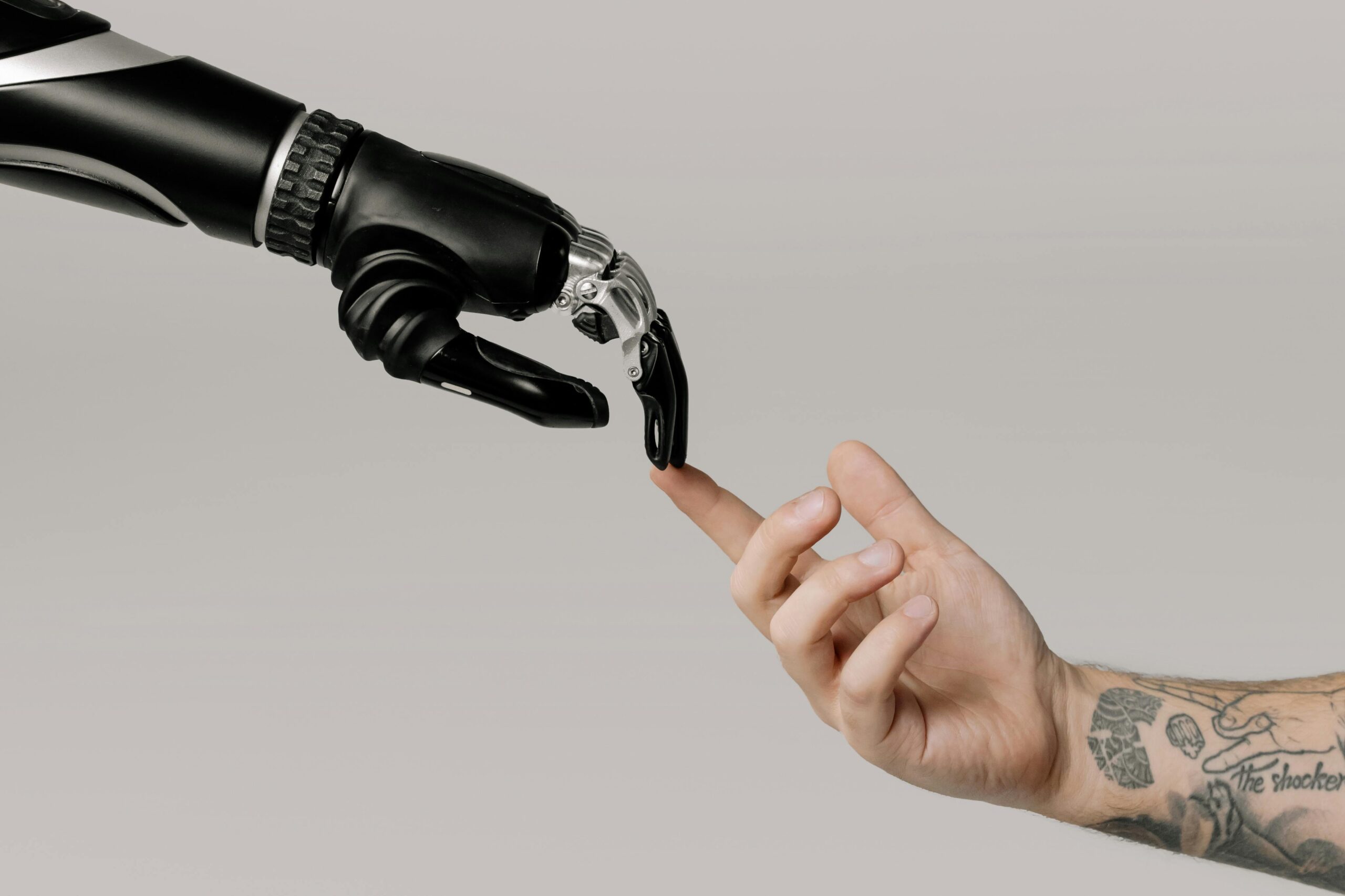
Artificial intelligence is revolutionizing how we connect across languages, breaking down barriers that once seemed insurmountable and opening unprecedented opportunities for global interaction.

🌐 The Evolution of Language Translation Technology
Translation has come a long way from the days of bulky dictionaries and phrase books. The journey from manual translation to machine-assisted systems, and now to sophisticated neural networks, represents one of the most significant technological leaps in communication history. Traditional machine translation relied on rule-based systems that often produced awkward, literal translations that missed cultural nuances and contextual meaning.
The introduction of statistical machine translation in the 1990s marked a significant improvement, but it wasn’t until the advent of neural machine translation (NMT) that we witnessed truly transformative results. Neural networks changed the game by learning from vast amounts of bilingual text, understanding patterns, context, and even subtle linguistic nuances that previous systems couldn’t grasp.
Today’s AI-assisted neural translation systems leverage deep learning algorithms that continuously improve through exposure to more data. These systems don’t just translate words—they interpret meaning, consider context, and adapt to different communication styles, making cross-language communication smoother and more natural than ever before.
Understanding Neural Machine Translation Architecture
Neural machine translation operates on a fundamentally different principle than its predecessors. At its core, NMT uses artificial neural networks that mimic the human brain’s information processing capabilities. The system typically consists of two main components: an encoder and a decoder, working together in what’s known as a sequence-to-sequence model.
The encoder processes the source language text, converting it into a numerical representation that captures its meaning. This intermediate representation exists in a language-agnostic space, essentially creating a universal understanding of the content’s meaning. The decoder then takes this representation and generates the corresponding text in the target language.
Modern systems incorporate attention mechanisms, allowing the model to focus on relevant parts of the input when generating each word in the output. This breakthrough solved one of the major challenges in earlier systems—handling long sentences where context from the beginning matters for translating the end.
The Role of Transformer Models
The introduction of transformer architecture revolutionized neural translation. Unlike previous sequential processing methods, transformers can process entire sentences simultaneously, dramatically improving both speed and accuracy. This architecture enables the system to understand relationships between words regardless of their distance in a sentence, capturing long-range dependencies that are crucial for accurate translation.
Transformers utilize self-attention mechanisms that weigh the importance of different words in relation to each other. When translating a sentence, the model can determine which words in the source language are most relevant for generating each word in the target language, leading to more coherent and contextually appropriate translations.
🚀 Real-World Applications Transforming Industries
AI-assisted neural translation is reshaping numerous sectors, creating opportunities that were previously impossible or economically unfeasible. The technology’s impact extends far beyond simple text conversion, enabling genuine cross-cultural collaboration and understanding.
Global Business and E-Commerce
International commerce has been transformed by instant translation capabilities. Companies can now communicate with customers worldwide without maintaining multilingual customer service teams in every market. Product descriptions, user reviews, and support documentation can be automatically translated, making markets accessible to businesses of all sizes.
E-commerce platforms leverage neural translation to provide localized shopping experiences, allowing customers to browse and purchase in their native language regardless of where products originate. This democratization of global trade has opened markets for small businesses that previously couldn’t afford professional translation services.
Healthcare and Medical Services
In healthcare settings, accurate communication can be life-saving. Neural translation systems help medical professionals communicate with patients who speak different languages, ensuring critical information isn’t lost in translation. Medical records, research papers, and drug information can be translated quickly, facilitating international medical collaboration and knowledge sharing.
Telemedicine platforms integrate real-time translation, enabling doctors to consult with patients across language barriers. This capability is particularly valuable in emergency situations or in regions with limited access to multilingual medical professionals.
Education and Academic Research
Educational content can now reach global audiences without the prohibitive costs of professional translation. Students can access learning materials in their preferred language, while researchers can collaborate across borders, sharing findings and methodologies without language constraints.
Academic institutions use neural translation to make their courses available internationally, expanding their reach and impact. Research papers can be translated rapidly, accelerating the pace of scientific discovery by making knowledge accessible across linguistic boundaries.
Leading Translation Technologies and Platforms 📱
Several platforms have emerged as leaders in AI-assisted neural translation, each offering unique features and capabilities. Google Translate remains one of the most widely used services, supporting over 130 languages and processing hundreds of billions of words daily. Its neural machine translation system continuously improves through user interactions and expanded training data.
DeepL has gained recognition for producing particularly natural-sounding translations, especially for European languages. The platform’s neural networks are trained on carefully curated datasets, prioritizing quality over quantity and producing translations that often rival human translators in fluency and accuracy.
Microsoft Translator integrates seamlessly with Office applications and offers real-time conversation translation through mobile apps. The service supports both text and speech translation, making it particularly useful for meetings and collaborative work environments.
Specialized Translation Solutions
Beyond general-purpose platforms, specialized translation tools have emerged for specific industries. Legal translation systems understand jurisdiction-specific terminology, while medical translation platforms incorporate specialized medical vocabularies and maintain compliance with healthcare regulations.
Technical translation tools serve engineering and technology sectors, handling complex technical terminology and maintaining consistency across large documentation sets. These specialized systems combine neural translation with industry-specific glossaries and quality assurance mechanisms.
Overcoming Challenges and Limitations ⚠️
Despite remarkable advances, AI-assisted neural translation faces ongoing challenges. Cultural nuances remain difficult to capture automatically. Idioms, humor, and cultural references often require human understanding to translate effectively. A phrase that makes perfect sense in one culture might be meaningless or even offensive in another.
Context dependency presents another significant challenge. The same word can have vastly different meanings depending on context, and while neural networks have improved at handling this, they still make mistakes. Professional human translators remain essential for high-stakes content where errors could have serious consequences.
Handling Low-Resource Languages
Neural translation systems perform exceptionally well for language pairs with abundant training data, but struggle with low-resource languages. Many indigenous and minority languages lack the large parallel text corpora needed to train effective neural models. Researchers are developing techniques like transfer learning and multilingual models to address this gap.
Zero-shot translation, where a model can translate between language pairs it hasn’t explicitly been trained on, represents a promising approach. By learning common patterns across multiple languages, these systems can provide basic translation even for underserved language pairs.
🔮 The Future of AI-Assisted Translation
The trajectory of neural translation technology points toward increasingly sophisticated and contextually aware systems. Multimodal translation, which combines text, speech, and visual information, will provide richer, more accurate translations by considering multiple information sources simultaneously.
Real-time speech translation is improving rapidly, approaching the science fiction ideal of universal translators. Devices that can translate conversations in real-time with minimal latency are becoming increasingly practical, promising to transform international business meetings, tourism, and diplomacy.
Integration with Augmented Reality
Augmented reality applications combined with neural translation will overlay translated text onto real-world objects. Imagine pointing your phone at a foreign-language sign and instantly seeing it translated in your native language, seamlessly integrated into your view. This technology is already emerging and will become increasingly sophisticated and ubiquitous.
Personalized Translation Models
Future systems will adapt to individual users, learning their preferences, writing style, and vocabulary. These personalized models will produce translations that better match how users naturally communicate, making translated content feel more authentic and personal.
Ethical Considerations and Privacy Concerns 🔒
As translation systems become more powerful and pervasive, important ethical questions emerge. Privacy concerns arise when sensitive documents are processed through cloud-based translation services. Organizations handling confidential information need translation solutions that protect data security while maintaining quality.
Bias in training data can lead to translation systems perpetuating stereotypes or translating in ways that reflect cultural biases present in their training materials. Developers must actively work to identify and mitigate these biases to ensure fair and accurate translation across all languages and cultures.
The Role of Human Translators
Rather than replacing human translators, AI-assisted neural translation is evolving into a powerful tool that augments human capabilities. Professional translators increasingly use neural translation as a starting point, editing and refining machine-generated translations rather than translating from scratch. This hybrid approach combines AI efficiency with human cultural understanding and nuance.
Implementing Neural Translation in Your Organization 💼
Organizations looking to leverage neural translation should start by identifying specific use cases where translation adds value. Customer support, content localization, and internal communication across international teams represent common starting points. Evaluating different platforms based on language pairs, accuracy requirements, and integration capabilities helps ensure successful implementation.
Consider whether cloud-based or on-premises solutions better fit your security and privacy requirements. Cloud services offer convenience and continuous updates, while on-premises deployments provide greater control over sensitive data. Many organizations adopt hybrid approaches, using cloud services for general content and dedicated systems for confidential materials.
Quality Assurance and Continuous Improvement
Implementing quality assurance processes ensures translation accuracy meets your standards. Human review of critical translations, especially those facing customers or partners, maintains quality while benefiting from AI efficiency. Gathering feedback on translation quality helps identify areas for improvement and informs decisions about when human intervention is necessary.

🌍 Breaking Down Global Barriers
AI-assisted neural translation represents more than technological advancement—it’s a tool for building bridges between cultures and communities. By making communication across languages accessible and affordable, this technology enables collaborations, relationships, and understanding that would otherwise be impossible.
Small businesses can compete in global markets, students can access educational resources regardless of their native language, and individuals can connect with people worldwide without language constraints. The democratizing effect of accessible translation technology is reshaping our increasingly interconnected world.
As systems continue improving, approaching and sometimes matching human translation quality, the barriers that have historically separated language communities continue to dissolve. While challenges remain and human expertise retains irreplaceable value, the trajectory is clear: we’re moving toward a world where language differences no longer limit human connection and collaboration.
The power of AI-assisted neural translation lies not just in its technical sophistication, but in its potential to foster greater understanding, cooperation, and unity across our diverse global community. As we continue developing and refining these systems, we move closer to truly unlocking global communication and realizing the vision of a world where everyone can connect, regardless of the language they speak.