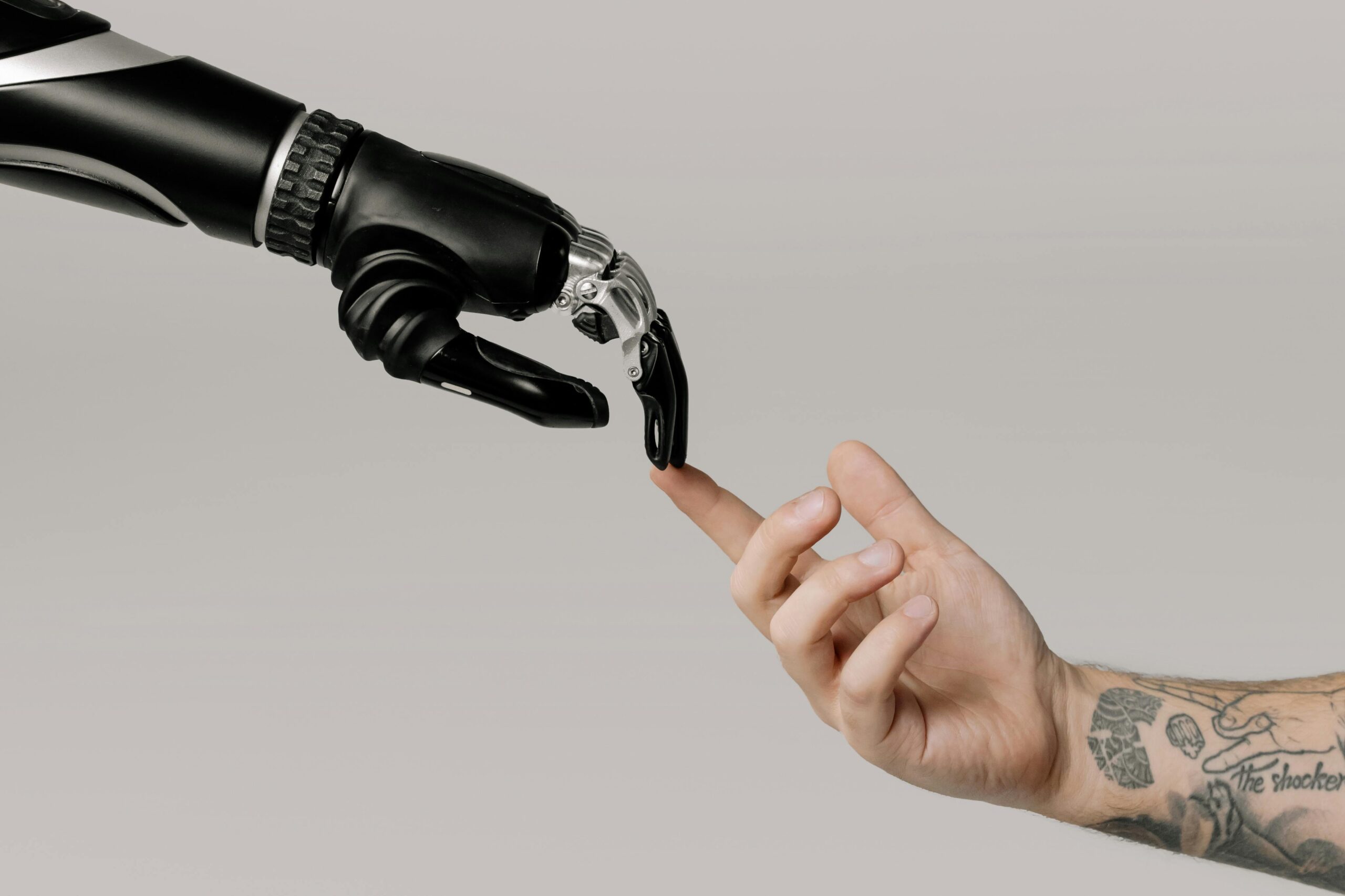
The convergence of human intelligence and artificial intelligence is reshaping how we solve problems, innovate, and understand our world. This partnership unlocks capabilities neither could achieve alone.

🧠 The Dawn of a New Cognitive Partnership
We stand at a remarkable inflection point in human history. The relationship between human cognition and artificial intelligence has evolved from one of simple tool usage to genuine collaboration. This transformation isn’t about machines replacing human thinking—it’s about amplifying what makes us uniquely human while leveraging computational power to transcend our biological limitations.
Human-AI collaborative reasoning represents more than technological advancement; it embodies a fundamental shift in how we approach complex challenges. When human creativity, intuition, and contextual understanding merge with AI’s processing speed, pattern recognition, and data analysis capabilities, we create a cognitive synergy that multiplies potential outcomes exponentially.
This collaboration manifests across countless domains: physicians diagnosing rare diseases with AI-assisted analysis, architects designing sustainable cities using predictive modeling, researchers accelerating scientific discoveries through automated hypothesis generation, and educators personalizing learning experiences for diverse student populations.
Breaking Through Cognitive Barriers
Human cognition, while remarkably sophisticated, operates within distinct boundaries. Our working memory can typically handle only seven chunks of information simultaneously. We struggle with processing vast datasets, maintaining consistent performance over extended periods, and eliminating cognitive biases that cloud judgment.
Artificial intelligence complements these limitations beautifully. AI systems excel at maintaining focus indefinitely, processing millions of data points simultaneously, and applying consistent logic without fatigue or emotional interference. However, AI lacks the human capacity for ethical reasoning, creative leaps, contextual wisdom, and genuine understanding of nuanced human experiences.
The collaborative model bridges both sets of limitations. Humans provide direction, context, ethical frameworks, and creative vision while AI contributes computational power, pattern detection, data synthesis, and tireless analysis. Together, they form a reasoning system more powerful than either component alone.
Complementary Strengths in Action ⚡
Consider medical diagnostics as a compelling example. A radiologist examining thousands of medical images might experience decision fatigue or occasionally overlook subtle anomalies. An AI system can flag potential concerns with remarkable consistency, analyzing pixel-level details humans might miss. However, the AI cannot understand a patient’s complete medical history, family circumstances, or quality-of-life considerations that influence treatment decisions.
When the radiologist and AI work together, diagnostic accuracy improves dramatically. The AI serves as a tireless second opinion, highlighting areas requiring closer examination while the physician applies clinical expertise, contextual knowledge, and human judgment to make final determinations. Studies show this collaboration reduces diagnostic errors by up to 85% compared to either working independently.
The Architecture of Effective Collaboration
Successful human-AI collaborative reasoning doesn’t happen automatically. It requires intentional design, clear communication protocols, and mutual understanding of respective capabilities and limitations. The most effective partnerships follow several key principles that maximize the strengths of both parties.
First, clarity of roles establishes who handles which aspects of the reasoning process. Humans typically excel at framing problems, defining objectives, establishing constraints, and making final decisions that carry ethical or emotional weight. AI excels at exploring solution spaces, identifying patterns, generating alternatives, and performing repetitive analytical tasks.
Second, iterative refinement allows both human and AI to improve their contributions through feedback loops. Humans refine their questions based on AI outputs, while AI systems learn from human corrections and preferences, gradually aligning more closely with human values and objectives.
Building Trust Through Transparency 🔍
Trust forms the foundation of any effective collaboration. For human-AI partnerships, this means AI systems must provide explainable reasoning rather than opaque “black box” outputs. When an AI makes a recommendation, humans need to understand the underlying logic, data sources, confidence levels, and potential limitations.
Transparency enables humans to identify when AI reasoning diverges from reality or overlooks critical factors. This oversight function remains essential because AI systems can perpetuate biases present in training data, misinterpret context, or apply patterns inappropriately to novel situations.
Conversely, humans must acknowledge their own biases and limitations, remaining open to AI insights that challenge preconceptions. The most powerful collaborative reasoning emerges when both parties maintain intellectual humility and receptiveness to correction.
Amplifying Creative and Analytical Thinking
The intersection of human creativity and AI’s analytical capabilities generates innovation at unprecedented scales. Creative professionals across industries now leverage AI as a creative partner rather than merely a productivity tool.
Writers use AI to explore alternative narrative directions, overcome creative blocks, and experiment with different stylistic approaches while maintaining their unique voice and vision. Musicians generate melodic variations, harmonic progressions, and instrumental arrangements that spark new compositional ideas. Designers iterate through countless visual possibilities, rapidly prototyping concepts that would take weeks to develop manually.
In each case, the human remains the creative director, curator, and final arbiter of quality. The AI functions as an inexhaustible creative collaborator, offering suggestions, variations, and alternatives that expand the possibility space without dictating final outcomes.
Scientific Discovery at Machine Speed 🔬
Scientific research particularly benefits from human-AI collaborative reasoning. The volume of published research now exceeds any individual’s capacity to read and synthesize. AI systems can analyze millions of scientific papers, identifying connections across disciplines, suggesting novel hypotheses, and highlighting gaps in current understanding.
Researchers then apply domain expertise to evaluate these AI-generated insights, designing experiments to test promising hypotheses. This collaboration accelerates the research cycle dramatically. Drug discovery timelines have compressed from 10-15 years to potentially 2-3 years through AI-assisted molecular modeling and screening combined with human expertise in biochemistry and clinical medicine.
Climate scientists use AI to process satellite imagery, oceanographic data, and atmospheric measurements at scales impossible for human analysis alone. These systems detect subtle patterns indicating environmental changes, which scientists then investigate to understand causal mechanisms and predict future trends.
Ethical Reasoning and Value Alignment
Perhaps the most crucial domain for human involvement in collaborative reasoning involves ethics and values. AI systems lack genuine moral understanding and cannot independently determine what should be done versus what can be done.
Humans must provide the ethical framework guiding AI applications. This includes defining acceptable use cases, establishing boundaries for data collection and usage, ensuring equitable outcomes across diverse populations, and maintaining accountability for decisions influenced by AI recommendations.
The challenge intensifies as AI systems grow more capable. As they handle increasingly complex reasoning tasks, the ethical implications multiply. An AI system optimizing resource allocation might propose mathematically efficient solutions that violate principles of fairness, dignity, or justice that humans consider non-negotiable.
Navigating Moral Complexity 🧭
Collaborative reasoning in ethical domains requires humans to remain engaged at every decision point with moral significance. This doesn’t mean rejecting AI assistance but rather ensuring human values ultimately guide outcomes.
For example, criminal justice systems increasingly use AI to assess recidivism risk, inform bail decisions, and guide sentencing recommendations. These tools can help reduce inconsistency and bias in judicial processes. However, they also risk perpetuating historical inequities encoded in training data or reducing complex human circumstances to statistical probabilities.
Effective collaboration means judges use these tools as informative inputs while maintaining responsibility for decisions that profoundly affect human lives. The AI can highlight relevant factors and patterns, but the judge must weigh these against broader considerations of justice, rehabilitation, and social impact.
Developing Collaborative Reasoning Skills
As human-AI collaboration becomes ubiquitous across professional domains, developing effective partnership skills becomes essential. Education systems must evolve beyond teaching students to work independently or in purely human teams, preparing them instead for mixed human-AI collaboration.
Key skills include learning to formulate precise questions that elicit useful AI responses, critically evaluating AI outputs for accuracy and appropriateness, understanding AI capabilities and limitations across different domains, and maintaining metacognitive awareness about when to rely on AI assistance versus human judgment.
Professionals must also develop comfort with uncertainty and ambiguity. AI systems provide probabilistic outputs rather than absolute certainty. Collaborative reasoning requires weighing confidence levels, considering multiple possibilities, and making decisions with incomplete information.
Educational Transformation 📚
Forward-thinking educational institutions are redesigning curricula around human-AI collaboration. Rather than viewing AI as a threat to academic integrity, they’re teaching students to leverage these tools effectively while developing uniquely human capabilities that complement machine intelligence.
This includes emphasizing critical thinking, ethical reasoning, creative problem-solving, emotional intelligence, and cross-cultural communication—skills that remain distinctly human even as AI capabilities expand. Students learn to approach AI as a collaborative partner, understanding both its power and its limitations.
Assessment methods are also evolving. Instead of testing memorization and routine problem-solving that AI can handle easily, evaluations focus on higher-order thinking: synthesizing information from multiple sources, evaluating trade-offs, making ethically informed decisions, and communicating complex ideas effectively.
Overcoming Implementation Challenges
Despite its tremendous potential, implementing effective human-AI collaborative reasoning faces several significant challenges. Technical limitations, organizational resistance, skill gaps, and ethical concerns all require thoughtful attention.
Technical challenges include ensuring AI systems provide explainable reasoning, maintaining data privacy and security, integrating AI tools into existing workflows, and managing the computational resources required for sophisticated AI applications.
Organizational challenges often prove equally significant. Established processes and hierarchies may resist incorporating AI into decision-making. Professionals may feel threatened by AI capabilities, fearing displacement rather than recognizing augmentation potential. Successfully implementing collaborative reasoning requires change management, training, and cultural shifts that embrace rather than resist this partnership.
Addressing the Skills Gap 💡
A significant barrier to effective collaboration involves the current skills gap. Many professionals lack training in working with AI systems, understanding their outputs, or integrating them effectively into workflows. Bridging this gap requires investment in professional development, accessible training resources, and user-friendly interfaces that don’t require technical expertise.
Organizations leading in human-AI collaboration prioritize ongoing training, create communities of practice where professionals share insights and best practices, and design AI tools with intuitive interfaces that facilitate rather than impede adoption.
The Future Landscape of Collaborative Intelligence
As AI capabilities continue expanding, the potential for human-AI collaborative reasoning grows exponentially. Emerging developments in natural language processing, multimodal reasoning, and contextual understanding are creating AI systems that collaborate more naturally and effectively with humans.
Future AI systems will better understand nuance, context, and human intent. They’ll engage in more sophisticated dialogue, asking clarifying questions when instructions are ambiguous and proactively identifying potential issues in proposed approaches. This evolution toward more natural collaboration will make these partnerships accessible to broader populations, not just technical specialists.
The economic implications are profound. Organizations that effectively leverage human-AI collaboration will gain significant competitive advantages through faster innovation, better decision-making, and more efficient operations. Industries from healthcare to manufacturing, finance to education will transform around these collaborative models.
Preserving Human Agency and Purpose 🌟
As we embrace these powerful collaborations, maintaining human agency and purpose remains paramount. Technology should amplify human potential rather than diminish human involvement. The goal isn’t creating a future where AI handles all reasoning while humans become passive observers, but rather one where collaboration elevates human capabilities to address challenges previously beyond our reach.
This requires intentional design choices that keep humans in meaningful control of important decisions, ensure AI remains transparent and accountable, distribute the benefits of collaborative reasoning broadly across society, and preserve space for human creativity, exploration, and growth.

Embracing Augmented Intelligence
The concept of “artificial intelligence” often suggests machines working independently or replacing human thinking. “Augmented intelligence” better captures the collaborative reality—AI systems that enhance rather than replace human reasoning.
This framing emphasizes partnership over competition, complementarity over substitution. It recognizes that the most powerful outcomes emerge not from AI working alone but from thoughtful integration of human and machine capabilities.
Every professional domain offers opportunities for this augmentation. Lawyers can research case law more comprehensively, farmers can optimize crop yields while minimizing environmental impact, engineers can simulate countless design variations, and teachers can personalize instruction for each student’s learning style and pace.
The key to unlocking infinite potential lies not in the raw capabilities of either humans or AI independently, but in the synergy created when both collaborate effectively. By combining human wisdom, creativity, and ethics with AI’s computational power, pattern recognition, and tireless analysis, we create reasoning capabilities that transcend the limitations of either partner alone.
As we move forward into an increasingly AI-integrated world, our success will depend on how thoughtfully we design these collaborations, how effectively we develop the skills to participate in them, and how deliberately we ensure they serve human flourishing. The infinite potential isn’t found in artificial intelligence alone—it emerges from the powerful partnership between human and machine intelligence working together toward shared goals.